|
The long-term goal of our research is to advance experimental paradigms for understanding
normal cognitive and disease processes at the level of neural circuits, with
emphasis on learning and memory processes. By contrast, much current research
on learning and memory concentrates on levels of organization in the nervous
system that are either more macroscopic (e.g. in cognitive psychology) or more
microscopic (e.g. in synaptic physiology).
Our approach combines behavioral, electrophysiological, and computational
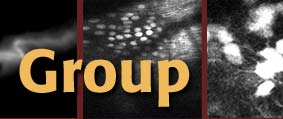
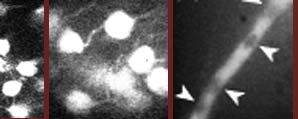
methodologies with high-resolution fluorescence optical imaging
that is capable of resolving individual neurons and dendrites.
By necessity, we aim to advance imaging methods so that we can
examine dynamics of neuronal populations or of dendritic compartments
in behaving animals. En route, we are also performing experiments
on circuit properties in anesthetized animals, such as the studies
that use our newly invented fluorescence endoscopes for examining
hippocampal cells and dendrites in vivo.
We seek explanations that span different levels of
organization, from cells to entire circuits. We work with both
genetic model organisms, mice and fruit flies, and human subjects.
Our research emphasizes understanding the control and learning
of motor behaviors, as well as the potential application of our
newly developed imaging techniques to clinical use in humans.
|